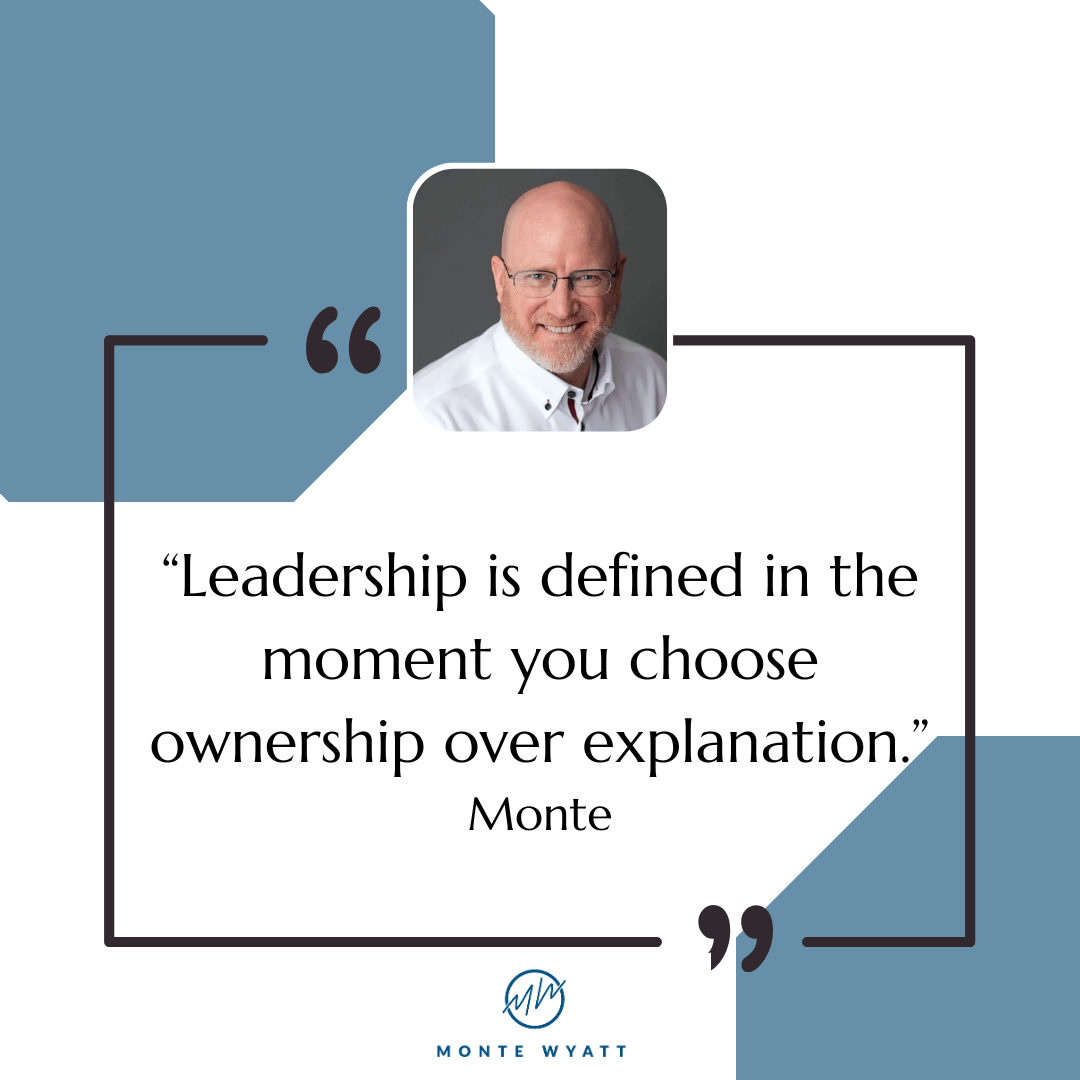
Leadership Traits That Lead to Business Success
Leadership and management are often confused, but they are not the same.
We manage processes.
We lead people.
Leadership creates clarity, focus, and passion. Management ensures efficiency. As Stephen Covey famously explained, management is climbing the ladder of success efficiently, while leadership determines whether the ladder is leaning against the right wall.
Authentic leadership shows up in moments of decision.
The Point of Decision: Victor or Victim
Every leader faces a defining moment, the point of decision. That moment separates two kinds of leaders:
-
Victors, who play above the point of decision
-
Victims, who play below the point of decision
Victim leadership shows up as blame, excuses, and denial. These leaders explain poor results by pointing outward:
-
“My team isn’t capable.”
-
“The economy is bad.”
-
“This situation isn’t my fault.”
When leaders operate below the point, progress stalls and culture suffers.
Victors, on the other hand, take full ownership. They accept responsibility for outcomes, decisions, and behaviors. They don’t hide behind circumstances or other people. They face reality as it is and take intentional action to move forward.
Leadership Is Ownership in Action
Good leaders live above the point.
They offer solutions instead of excuses.
They do what they say they will do.
They hold themselves accountable for results, decisions, and behavior.
Living above the point isn’t always easy. The world subtly teaches us to live below it. Turn on the news, and you’ll see constant blame, outrage, and finger-pointing. That way of thinking may feel normal—but it isn’t leadership.
Strong leadership requires intentionality.
If you catch yourself operating below the point, don’t get discouraged. Awareness is the first step. Growth happens when leaders choose ownership over excuses again and again.
Victim Leadership vs. Victor Leadership
Here’s what leadership looks like in action.
Ineffective (Victim) Leaders:
-
Hide behind email instead of having honest conversations
-
Make assumptions and react emotionally
-
Quit, complain, or disengage
-
Make problems someone else’s responsibility
-
Refuse to adapt or collaborate
Effective (Victor) Leaders:
-
Speak directly by phone or in person
-
Ask questions to understand facts before reacting
-
Find and implement solutions
-
Ask themselves how they can grow or improve
-
Learn and adapt to others’ styles to get results
These behaviors may seem simple—but they define culture.
Why Strong Leaders Aren’t Always Good Leaders
In recent years, high-profile corporate scandals have exposed a critical truth: strength, passion, and charisma alone do not make a good leader.
In many of these cases, toxic cultures developed because leaders failed to take ownership. Unrealistic metrics were set. Ethical lines were blurred. And people “went along to get along.”
Those environments didn’t happen by accident. They were created or permitted by leaders who operated below the decision point.
Good leadership requires more than influence.
It requires accountability.
The Leadership Trait That Matters Most
The difference between effective and ineffective leadership comes down to one word:
Intentionality.
Leadership is about understanding yourself, understanding others, and choosing how you respond in critical moments. Every decision reinforces either a culture of ownership or a culture of excuses.
The choice is always yours.
Your Turn
What kind of leadership have you experienced in your organization, as a victor or a victim?
We’d love to hear your perspective.
Ready to Lead Above the Point?
Great leadership is a choice made moment by moment.
If you’re ready to move beyond excuses, take full ownership, and lead with intention:
-
Connect directly with Monte Wyatt to start a conversation about leadership, accountability, and business growth
-
Explore coaching, speaking, and leadership development opportunities designed to help leaders play above the point of decision.
-
Gain practical insight and tools to strengthen your mindset, culture, and results.
Because leadership isn’t about reacting to circumstances, it’s about choosing ownership, accountability, and intentional action when it matters most.